

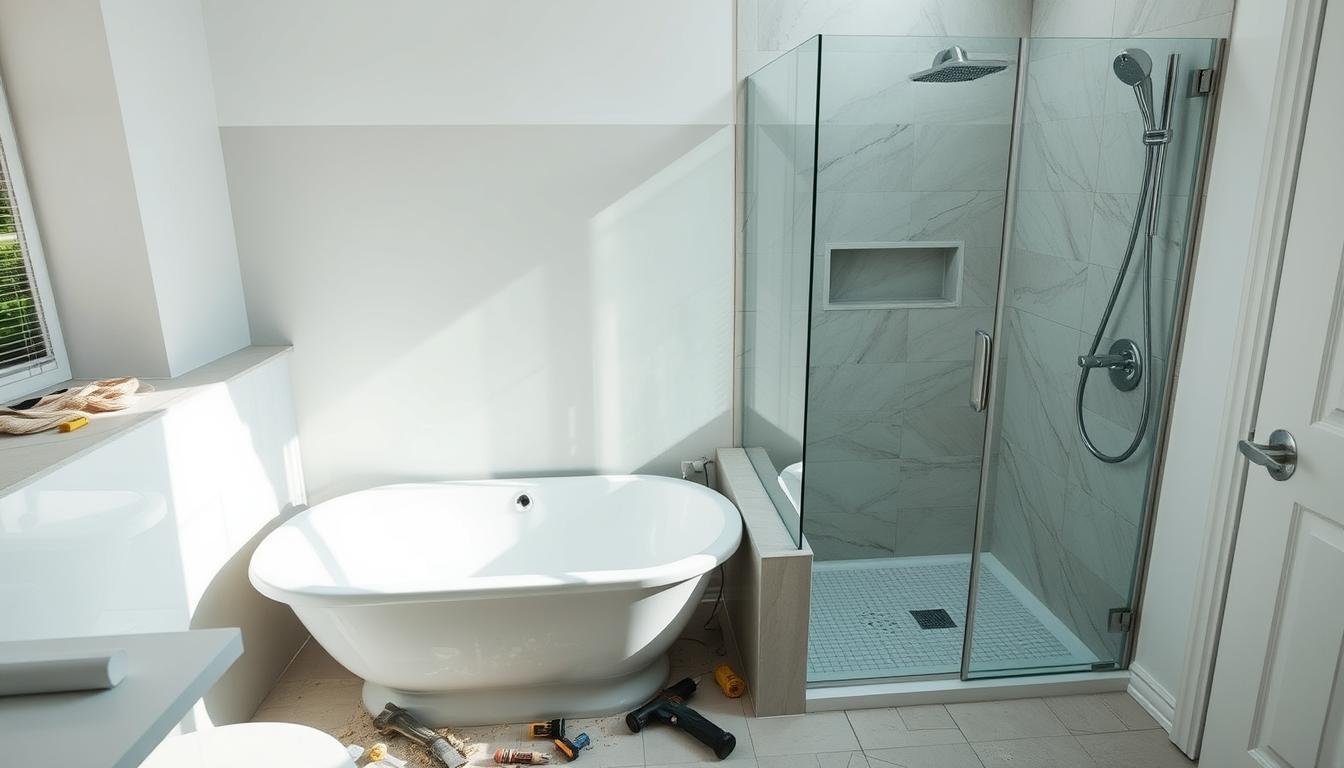
Ever thought about changing your bathroom from a tub to a shower? It might seem like a simple change, but it’s not that straightforward. The cost to remove a bathtub and install a shower can vary a lot.
In Australia, people are making their bathrooms more functional and stylish. The average cost for a bathroom makeover is now $26,000. This shows a trend towards upgrading. Knowing the costs and what affects shower installation prices can help you make better choices.
Key Takeaways
- The average cost for a bathroom renovation in Australia is about $26,000.
- Basic renovations can range from $5,000 to $15,000, typically focusing on cosmetic changes.
- Mid-range renovations often cost between $15,000 and $40,000, offering better materials and fixtures.
- Luxury bathroom renovations generally start at $40,000 and involve high-end materials and professional input.
- Plumbing costs can vary significantly, with plumbers charging rates typically between $60 and $150 per hour.
- Removing a bathtub usually costs between $50 to $100, depending on the location and service provider.
Understanding Bathroom Renovation Costs
Knowing the costs of bathroom remodeling is key for homeowners. The average cost can change a lot based on different factors. This section will cover typical costs for bathroom renovations in Australia and what affects these costs.
Average Renovation Expenses in Australia
The average budget for a bathroom renovation in Australia is between $20,000 and $35,000. For bigger or luxury renovations, costs can go over $35,000. This is due to higher material and labor costs.
In Sydney, renovation costs per square meter are between $2,500 and $4,500. The total cost depends on the project’s size and complexity. Here are some common budget ranges:
| Budget Category | Estimated Cost |
|---|---|
| Budget | $2,000 to $7,000 |
| Mid-Range | $8,000 to $16,000 |
| High-End | $16,000 to $45,000+ |
Factors Influencing Remodeling Costs
Several factors can change the cost of remodeling. These include:
- Size of the bathroom
- Complexity of the renovation
- Quality of materials and finishes
- Labor costs associated with tradespeople
- Any structural modifications required
Most of the cost of bathroom remodeling goes to labor. Up to 70% of the cost is for tradespeople, and 30% is for materials. Knowing this helps in making a realistic budget for your renovation.
How much does it cost to remove a bathtub and install a shower?
Thinking about a bathroom makeover? Knowing the cost to swap out a bathtub for a shower is key. The price depends on the bathroom size, material choices, and how complex the install is. Knowing these details helps you plan your budget better.
Breakdown of Expenses
Breaking down the costs in your bathroom update can help you understand what to expect. Small bathrooms usually cost between $2,000 and $3,000 for basic setups. Medium and large bathrooms can cost more, often between $3,000 and $8,000. These prices cover labor, materials, and any custom touches you might want.
Price Ranges of Shower Installations
Shower installation prices vary a lot. Here’s a table showing typical costs for different bathroom sizes:
| Bathroom Size | Installation Price Range |
|---|---|
| Small | $2,000 – $3,000 |
| Medium | $3,000 – $4,000 |
| Large | $5,000 – $8,000 |
Remember, these prices include many things like the shower head type and plumbing complexity. Planning ahead helps you better estimate costs.
Assessing Tub Removal Expenses
Removing a bathtub can cost more than you think. It’s important to know the costs involved to plan your budget well. Tile removal charges can also add up, making it crucial to evaluate all expenses carefully.
Tile Removal Charges
Tile removal costs usually range from $45 to $55 per square meter. The size of your bathroom and the tile complexity can increase these costs. You’ll need to include these expenses in your budget to access plumbing and prepare for a new installation.
Potential Asbestos and Pest Issues
Asbestos or pests found during removal can raise costs. Asbestos removal can cost between $35 to $50 per square meter. It requires special handling due to health risks. Pest issues can also add to the costs, making it important to budget for these surprises.
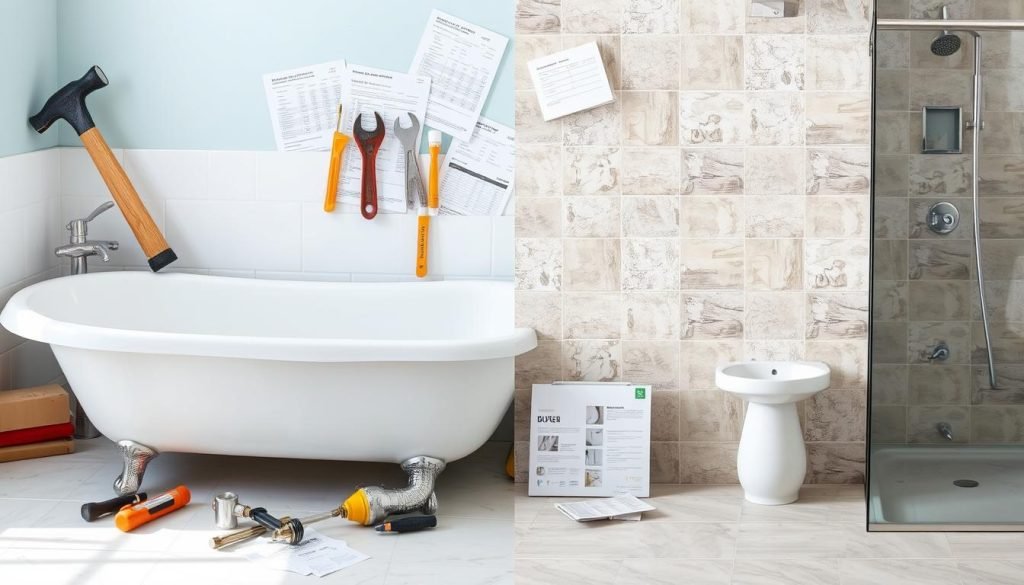
| Expense Type | Estimated Cost |
|---|---|
| Tile Removal Charges | $45 – $55 per square meter |
| Asbestos Removal | $35 – $50 per square meter |
| Pest Inspections | Varies by service |
Knowing the costs of tub removal and tile removal helps you plan better. By considering all possible expenses, you can make your renovation smoother and more predictable.
Cost of Plumbing and Electrical Work
Plumbing and electrical work can greatly impact your renovation budget. It’s key to understand these costs for good planning.
Hourly Rates for Plumbers and Electricians
When planning a renovation, remember the hourly rates for plumbers and electricians. Plumbers usually charge between $100 and $150 per hour. Electricians might cost between $80 to $100 per hour.
These prices can change based on the job’s complexity and the worker’s experience. For big electrical jobs, like installing new lights, costs will go up. This is because more labor and skill are needed.
Costs Associated with New Installations
There are also other costs for new installations you should consider. A bathroom renovation’s plumbing can cost around $3,000. This includes more than just the plumber’s time.
For electrical work like adding outlets, lights, and more, expect to pay about $2,000. These costs highlight the importance of careful budgeting. They can add a lot to your renovation’s total cost.
Choosing Materials and Fittings
When you’re planning a bathroom renovation, picking the right materials and fittings is key. The quality and type of these materials can greatly affect your budget. It’s important to know how different materials can change your costs.
For simple renovations, tiles might cost between $30 to $50 per square meter. But, if you want something more luxurious, prices can go up to $165 per square meter. This shows how important it is to weigh the value of materials against luxury options.
Cost Differences in Various Material Qualities
Different materials have different benefits and prices. Here’s a quick look at what you might spend on your renovation:
| Category | Budget Options | Standard Options | Premium Options |
|---|---|---|---|
| Tiles | $30 – $50 per sqm | $50 – $100 per sqm | $80 – $165 per sqm |
| Bathtub | $300 – $800 | $800 – $3,000 | $3,000 – $8,000 |
| Toilet | $199 – $400 | $400 – $500 | $1,000 – $1,400 |
| Vanity | $120 – $500 | $700 – $850 | $1,400 – $2,000 |
| Showerhead and Tap | $100 – $200 | $200 – $500 | $500 and above |
Value vs. Luxury Fittings
Choosing between value and luxury fittings depends on what you want. Luxury options can make your bathroom look amazing, but they cost more. Value fittings, on the other hand, are more affordable but still work well.
Think about how long you want your bathroom to last and how it will look. Spending a bit more on quality materials and fittings can make your bathroom look and work better over time. Finding the right balance between cost and quality will make you happy with your renovation.
Evaluating Contractor Hiring Fees
It’s important to understand contractor hiring fees when planning a bathroom renovation. These costs can greatly affect your budget. Knowing the rates based on experience and project complexity is key.
Understanding Contractor Rates
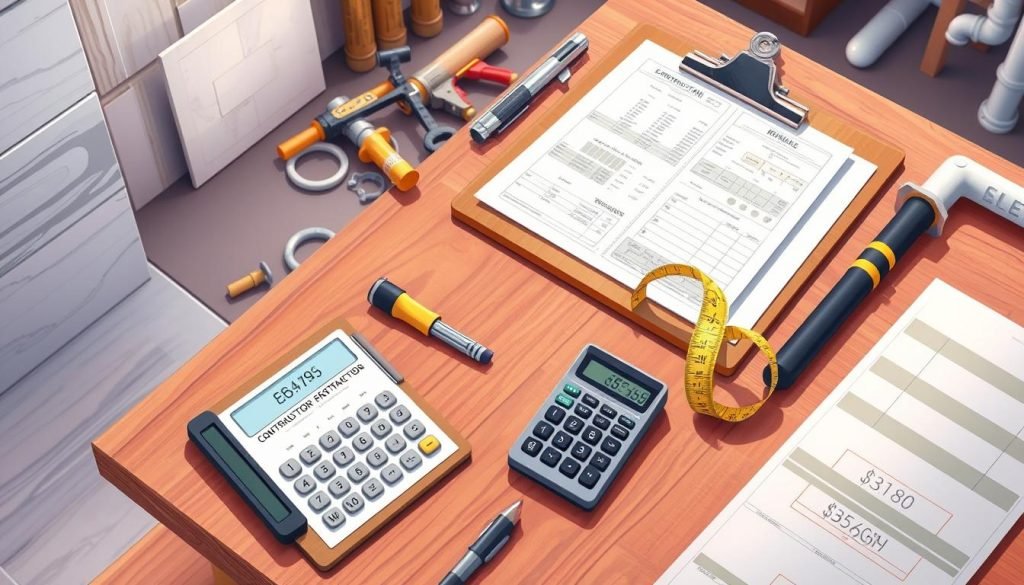
Contractor rates in Australia vary a lot. They depend on the contractor’s skills and local demand. For instance, skilled bathroom renovators usually charge about $98.13 per hour. Their rates can go from $50 to $121.
Plumbers and electricians also have their own rates. Plumbers charge from $60 to $90 per hour. Electricians might charge between $80 and $100. There’s also a call-out fee, which is usually between $60 and $150 for both trades.
Importance of Professional Help in Renovations
Getting professional help for your renovation has many benefits. Experienced contractors make sure your work meets local building codes. This reduces risks from structural changes and plumbing or electrical work.
They also help you deal with unexpected problems that might come up. Their advice is invaluable in navigating these challenges.
| Contractor Type | Hourly Rate | Call-out Fee |
|---|---|---|
| Bathroom Renovator | $50 – $121 | N/A |
| Plumber | $60 – $90 | $60 – $150 |
| Electrician | $80 – $100 | $60 – $150 |
Renovation Budgeting Tips
Effective home renovation budgeting is key for a smooth bathroom renovation. Knowing potential costs and unexpected expenses helps stay on track. Strategic planning can make your budget go further and meet your goals.
Creating a Realistic Budget
A realistic budget is the base for successful bathroom renovations. Start by looking at your overall costs, which can be around $15,000 in Australia. Here are some budget ranges to consider:
- Small budget range: $5,000 – $10,000
- Mid-range budget: $10,000 – $25,000
- Luxury budget: $25,000+
Labor costs usually take up 40% – 50% of your total budget. Make sure to include costs for materials, plumbing, and extra services like waterproofing. Waterproofing can cost between $750 and $900. Always add a 10-20% buffer for surprises, especially in older homes.
How to Cut Costs Effectively
Using smart renovation budgeting tips can save a lot. Choosing mid-range materials offers great value without losing quality. For example, ceramic tiles start at $20 per square meter, while vinyl flooring costs between $30 and $70 per square meter.
Here are some ways to save:
- Opt for basic bathroom fixtures instead of designer ones
- Go for simpler layouts to cut down on labor and material costs
- Get advice from a bathroom designer for cost-saving suggestions
These tips can help keep your budget in check while creating a beautiful and functional bathroom.
The Role of Design in Bathroom Renovations
Good design is key to a great bathroom renovation. It affects both looks and function. Working with interior designers makes planning better, offering insights that improve layouts and styles. They can turn a simple bathroom into a special place, just for you.
Collaborating with Interior Designers
Working with interior designers can really help your project. They have lots of experience and knowledge. They help with:
- Picking the right materials and finishes that fit your budget.
- Designing a layout that uses space well.
- Adding current trends while keeping your style in mind.
With their help, you can avoid mistakes and make sure every part of the design works well.
Utilizing 3D CAD Software for Planning
New technology makes planning easier. 3D CAD software lets you see your renovation before it starts. You can:
- See what your bathroom will look like.
- Try out different designs and materials.
- Decide on lighting, colors, and textures.
Knowing how design impacts bathroom renovations helps you create a space that’s both useful and stylish. Working with interior designers and using advanced tools makes the renovation smoother. You’ll end up with a bathroom that looks great and works well.
Potential Hidden Costs to Consider
When planning a bathroom renovation, it’s key to know about hidden costs. Many overlook expenses for permits and regulations. These can surprise you and affect your budget. Being ready for these costs makes the renovation smoother.
Permits and Regulations
Renovations often need permits and must follow local rules. This can lead to hidden costs, especially if you need many permits. Permit fees change based on where you are and the work. Always check with local authorities before starting your project.
Unexpected Structural Changes
Even with a clear plan, unexpected changes can happen. You might need more plumbing or electrical work if you remove the bathtub. These hidden costs can add up quickly. Doing thorough inspections before starting can help, but be ready for changes that might increase your budget.
Conclusion
Understanding the costs of removing a bathtub and installing a shower is key. The costs can change a lot based on the shower type, materials, and labor needed. Knowing the details of your shower vision helps estimate costs better.
Labor costs are also important in your budget. Contractors’ rates can range from $50 to $150 an hour. Planning for these costs can greatly affect your budget. Choosing a shower can save money in the long run, especially on water and utility bills.
Good planning and research help you make smart choices. By considering all costs, like safety features and permits, your shower installation will meet your needs and increase your home’s value.